Winter changes how we move.
Colder temperatures, shorter days, icy walkways, and heavier clothing all contribute to winter mobility challenges that can affect nearly anyone—not just seniors.
Whether you’re aging in place, helping a parent stay safe, living with arthritis, or simply concerned about slips and falls in winter, understanding seasonal risks is the first step toward preventing them.
Why Winter Makes Mobility Harder
Cold weather affects the body and the environment simultaneously.
1. Ice and Snow Create Unpredictable Surfaces
Even lightly frosted pavement can increase slip potential. Ice patches, compacted snow, and wet entryways significantly increase winter fall risk.
2. Reduced Daylight Impacts Visibility
Shorter days mean more movement in dim lighting — both outside and inside the home.
3. Cold Affects Muscles and Joints
Mobility issues in cold weather often stem from stiffness and slower reaction time.
4. Winter Routines Change
Heavier coats, bulkier boots, gloves, and more time indoors all subtly alter balance and movement patterns.
Importantly, winter mobility challenges affect adults of all ages—especially those with balance concerns, arthritis, limited strength, or fatigue.
Slips, Trips, and Falls on Ice and Snow
Outdoor hazards are the most visible winter mobility threat.
Common trouble spots include:
- Icy sidewalks
- Snow-covered driveways
- Porch steps
- Entry thresholds
- Garage floors
A single fall can lead to weeks or months of recovery. Prevention matters.
Outdoor Prevention Tips
- Wear traction footwear or add ice grips
- Use walking aids consistently
- Avoid carrying heavy/bulky loads while navigating steps
- Use handrails every time
- Plan outings during daylight hours
Safer Entryway Checklist
- Salt or sand spread regularly
- Outdoor lighting walkways
- Secure handrails
- Non-slip mats inside and outside
- Clear pathways free of clutter
These small steps can dramatically reduce slips and falls throughout the year; use some of these ideas year-round for continued safety.
Reduced Balance and Stability in Cold Weather
Cold temperatures can subtly change how we walk because it can cause muscles to tighten which can lead to shorter steps. It can also delay reaction times – or caution can lead to overcorrection.
To improve stability:
- Take shorter, deliberate steps
- Use railings even if you normally wouldn’t
- Avoid rushing
- Plan routes with fewer obstacles
If stairs feel less steady than they did last year, that’s important information—not a reason to push through discomfort.
Joint Pain and Stiffness That Limits Movement
Winter often increases joint stiffness, especially for people managing arthritis.
Stiff joints can make:
- Climbing stairs harder
- Standing from seated positions slower
- Transfers less predictable
Stairs as a Winter Mobility Bottleneck
Stairs often become the biggest mobility challenge in winter.
Why?
- Increased fatigue
- Stiffer joints
- Dimmer lighting
- More frequent indoor activity
Mobility Solutions That Help During Winter
Home access products reduce risk by minimizing strain and instability.
Helpful Supports
- Additional handrails
- Threshold ramps
- Non-slip surfaces
- Vertical platform lifts
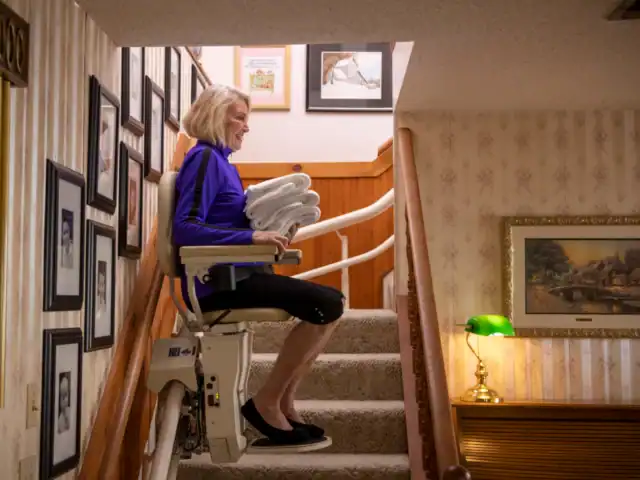
- Stairlifts
- Home elevators
Stairlift vs. Elevator: Winter Safety Comparison
Stairlifts:
- Ideal for single staircases
- Quick installation
- Lower reliance on physical strength
- Secure seating and smooth travel
Home Elevators:
- Enclosed cabin
- Allows a caregiver to ride alongside
- Stable handrails
- Useful for multi-level homes
Choosing the right mobility solution depends on home layout, strength, balance, and long-term plans.
Final Thoughts
Winter mobility challenges are common—and manageable.
With simple prevention steps, thoughtful planning, and the right home access solutions, you can reduce winter fall risk and move confidently through every season. Are you ready to learn more about stairlifts, ramps, or other home accessibility tools? Connect with a local Harmar dealer today for a free consultation!