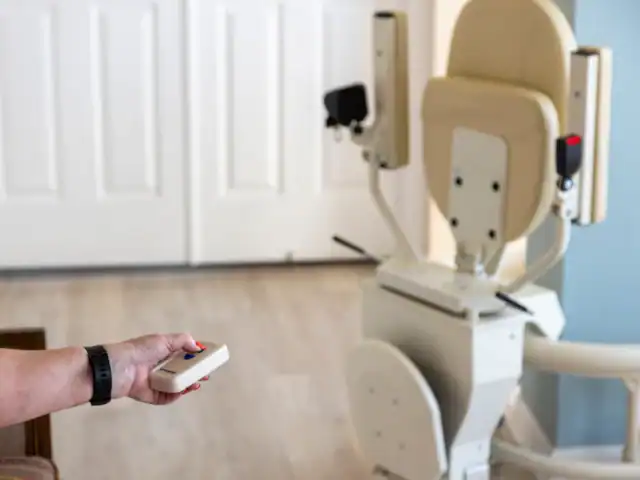
A stairlift often gives small clues before a problem becomes a complete shutdown. Paying attention to changes in sound, movement, charging, and controls can help you arrange stairlift servicing before the equipment becomes unavailable.
Contact a professional if you notice:
- Unusual grinding, clicking, scraping, squealing, or repeated beeping
- Jerky movement, shuddering, hesitation, or an unusually bumpy ride
- A slower start or reduced travel speed that is not normal for the model
- A warning light, error code, or beep pattern that returns after basic troubleshooting
- The lift stopping unexpectedly or working only some of the time
- Reduced battery performance, repeated low-battery warnings, or failure to charge
- A seat, footrest, armrest, swivel mechanism, rail, or mounting point that appears loose or damaged
- A burning smell, unusual heat, smoke, sparking, exposed wiring, or signs of water intrusion
Some signals indicate a simple setup issue, such as a seat that is not locked into its travel position. Others require a trained technician. When in doubt, pause use and call the dealer rather than experimenting with a mobility device you depend on.
First Steps to Take Before Calling for Service
If your stairlift is not working, a few safe checks may resolve the issue or give the service provider useful information. Use only the steps permitted in the owner’s manual for your exact model.
- Make sure the stairlift is turned on. Check the main power switch or key switch described in the manual. Some models will not charge while switched off.
- Check the household power source. Confirm that the stairlift charger is plugged in and that the outlet or circuit has power. Do not open the charger or electrical components.
- Confirm the lift is at a charging point. Depending on the model, the stairlift may charge at one or both ends of the rail or along a charging strip. Look for the normal charging indicator described in the manual.
- Check the operating positions. Make sure the seat is fully rotated and locked for travel, the armrests are positioned correctly, and the seat belt or control setup matches the model’s instructions.
- Look for visible obstructions. Check the rail, footrest, and nearby stairs for items that may be pressing an obstruction sensor. Remove only loose household objects; do not reach into mechanisms.
- Try the correct control. Test the chair control and, if applicable, the call/send remotes. A remote may need a replacement battery or may be outside its working range.
- Record the warning signal. Note the LED color, displayed code, and number or pattern of beeps. A short video or audio recording can help the dealer diagnose an intermittent problem.
- Consult the owner’s manual. Harmar manuals include model-specific operating and troubleshooting information. Stop if the recommended checks do not restore normal operation.
Common Stairlift Problems and Their Causes
| What you notice | Possible cause | Safe next step |
| Lift will not move | Power switch off, charger issue, seat not locked, safety edge activated, or system fault | Check approved controls, charging, seat position, and visible obstructions; record any code. |
| Repeated beeping | Lift is away from its charging point, battery charge is low, or the controller is reporting a fault | Park the lift correctly and consult the model’s beep-code guide. Call if the alert continues. |
| Remote does not work | Remote battery, range, pairing, or receiver issue | Try the chair control and replace the remote battery only as the manual allows. |
| Jerky or noisy travel | Debris, wear, alignment issue, loose component, or drive-system fault | Stop use and schedule service. Do not lubricate or adjust the rail unless the manual explicitly directs it. |
| Short battery runtime | Aging batteries, charging fault, power interruption, or frequent heavy use | Confirm normal charging indicators and arrange a professional battery test. |
| Stops at one location | Obstruction sensor, rail issue, limit or position sensor, or other fault | Check for loose objects and note the stopping point. Persistent faults need service. |
Which Stairlift Problems Can I Fix Myself?
Homeowner troubleshooting should be limited to simple operational checks, cleaning, and other actions specifically described in the owner’s manual. It may be appropriate to restore a correctly tripped household breaker once, reposition the chair at its charging location, remove a loose object from the stairs, or replace a handheld remote battery.
Mechanical adjustment, wiring work, battery replacement inside the stairlift, rail alignment, controller diagnosis, sensor calibration, and removal of covers belong to trained professionals. Unauthorized changes can create a safety risk and may affect warranty coverage.
When to Call a Professional
Call the installing dealer or a qualified Harmar service provider when the basic checks do not restore normal operation. Professional diagnosis is especially important for:
- Repeated shutdowns or a fault that returns after the lift is reset according to the manual
- Persistent error codes, red status lights, or unfamiliar beep patterns
- Electrical smells, overheating, sparking, damaged cords, or exposed wiring
- Visible damage to the rail, chair, footrest, seat, swivel, mounts, or folding-rail components
- Movement that is jerky, unusually slow, noisy, or inconsistent
- A lift involved in an impact, flood, leak, remodeling work, or other event that may have affected it
- Battery or charging problems that continue after confirming the charger and parking position
Start with the dealer who installed the stairlift; their contact information may be on the equipment, owner paperwork, or warranty records. If that dealer is unavailable, Harmar’s dealer locator can connect you with a local provider. Harmar LiftSquad technicians are factory-trained to install and service Harmar products.
Why Routine Stairlift Maintenance Matters
Routine stairlift maintenance helps protect more than the equipment. For someone who relies on the lift to reach a bedroom, bathroom, or main living area, dependable operation supports daily independence and reduces the chance of being unexpectedly separated from an essential part of the home.
Preventative service can help a technician identify worn batteries, loose connections, sensor problems, developing noises, or mounting concerns before they cause a shutdown. Maintenance also helps preserve ride quality and may reduce the likelihood that a small, manageable issue grows into a more expensive repair.
How Often Should a Stairlift Be Serviced?
Harmar strongly suggests considering an annual stairlift service appointment, although the correct schedule depends on the product, usage, environment, local requirements, service agreement, and instructions for the specific model. Outdoor lifts, heavily used lifts, and equipment exposed to dust, humidity, cold, or coastal conditions may need closer attention.
Battery evaluation should be part of routine service. Battery life varies by stairlift model, trip frequency, charging habits, temperature, and battery condition. Some Harmar owner guidance notes replacement averages around one to two years for certain models, while other Harmar educational content describes a broader range. Follow the current manual and test results for your exact stairlift rather than replacing batteries on a universal timetable.
What Happens During a Stairlift Service Appointment?
The exact checklist varies by model and dealer, but a professional service visit may include:
- Reviewing reported symptoms, fault codes, beep patterns, and service history
- Inspecting the rail, mounts, seat, armrests, footrest, swivel, seat belt, and folding components
- Testing safety edges, obstruction sensors, interlocks, controls, and call/send remotes
- Checking ride quality, stopping, parking, and charging behavior
- Testing battery voltage, charging performance, and capacity under appropriate conditions
- Inspecting wiring, electrical connections, the charger, and controller diagnostics
- Cleaning model-appropriate areas and addressing debris or wear
- Completing only the manufacturer-approved adjustments or parts replacement the lift requires
Harmar states that its stairlifts do not require grease or homeowner-applied lubrication to operate. Avoid spraying lubricants, cleaners, or other products onto the rail or internal components unless the owner’s manual or servicing dealer specifically approves them.
What to Do if a Stairlift Stops During Operation
A stop on the stairs can be frightening, but the safest response is calm and deliberate:
- Stay seated and keep the seat belt fastened. Do not attempt to climb off the chair onto the stairs unless emergency responders direct you to do so.
- Release the control and check your surroundings. A footrest or carriage safety edge may have detected an object. Remove only an item you can reach safely without leaning or unfastening.
- Follow the owner’s manual. Check the status light or beep code and use only the reset or operating steps approved for the model.
- Call for assistance. Use a phone, voice assistant, wearable alert, or another preplanned method to contact a caregiver, dealer, or emergency service.
- Treat smoke, fire, sparking, or a medical emergency as urgent. Call 911 or local emergency services. Do not continue operating the lift.
Most Harmar stairlifts use onboard batteries for normal travel while household electricity keeps those batteries charged. This means a charged lift may continue operating during a power outage. Available trips vary with the model, battery condition, load, travel distance, and outage length, so every household should have a backup mobility and communication plan.
Tips for Extending the Life of Your Stairlift
- Keep the rail and stairs clear. Dust with a soft cloth and remove loose objects regularly. Use only cleaning methods approved in the manual.
- Park the lift where it charges. Leaving the stairlift at the correct charging point helps maintain battery readiness.
- Keep the charger connected. Unless the manual or dealer instructs otherwise, avoid unplugging the charging system during ordinary use.
- Use the stairlift as designed. Observe the model’s capacity, sit fully in the seat, fasten the seat belt, and keep items clear of the travel path.
- Listen for changes. Report new sounds, hesitation, movement changes, or warnings early.
- Protect outdoor equipment. Follow the outdoor model’s cover, cleaning, temperature, and weather guidance.
- Schedule preventative service. An annual professional review is a practical baseline unless your manual, dealer, or service agreement calls for another interval.
- Keep records. Save the model and serial number, owner’s manual, dealer contact information, warranty details, and service history together.
Stairlift Service Supports Long-Term Independence
A stairlift is often one of the hardest-working accessibility products in a home. Giving it regular attention helps keep the route between floors reliable for the person using it and reassuring for everyone supporting them.
If your Harmar stairlift is not working as expected, begin with the safe checks in the owner’s manual. Then contact the installing dealer or a Harmar-certified service professional for anything persistent, mechanical, electrical, or unfamiliar. A timely service appointment can turn a worrying interruption into a manageable repair—and help the lift return to what it does best: making home feel like home.
Frequently Asked Questions
Who should I call if my Harmar stairlift needs repair?
Contact the dealer who installed the stairlift first. Their information may be on the equipment or in your paperwork. If they are unavailable, use Harmar’s dealer locator to find a local authorized provider or ask about Harmar LiftSquad service.
How often should a stairlift be serviced?
Harmar strongly suggests considering annual professional service. Your model’s manual, usage, environment, dealer, and service agreement may call for a different schedule.
Why is my stairlift beeping?
Beeping may indicate that the lift is not parked at its charging point, the battery charge is low, a safety condition is active, or the controller has detected a fault. Count or record the beeps and check the troubleshooting section of the owner’s manual.
Can I lubricate my Harmar stairlift rail?
Do not apply grease or lubricant unless the current manual or an authorized technician specifically directs you to do so. Harmar states that its stairlifts do not require grease or lubrication for normal operation.
How do I know if my stairlift batteries need replacement?
Warning beeps, slower starts, reduced travel, failure to hold charge, or repeated charging faults can indicate a battery problem. A technician can test the batteries and charging system before replacing parts.
What should I do if my stairlift stops while I am on it?
Remain seated with the seat belt fastened, release the control, check only for safely visible obstructions, and follow the model’s manual. Call for assistance if the lift does not resume. Do not attempt to climb off onto the stairs.
Find Stairlift Service Near You
A local Harmar dealer can help diagnose a problem, schedule stairlift servicing, and explain the maintenance needs for your specific model.
Find a Harmar-certified dealer