

Mobility and Accessibility Resources for Veterans: A Complete Guide
October 2, 2026
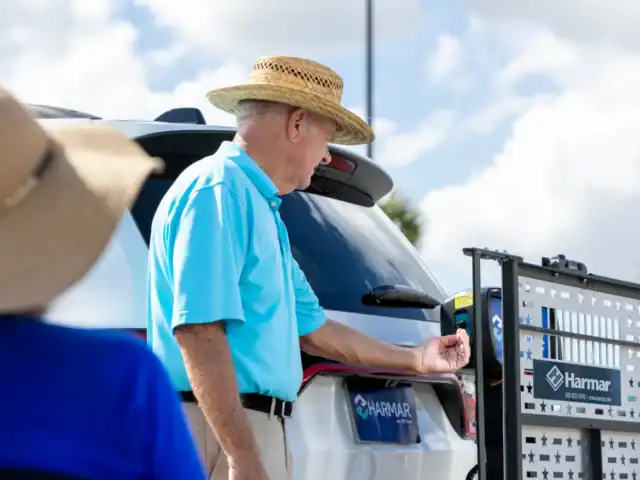
Veterans who need safer access at home or on the road may qualify for VA grants, adaptive-equipment benefits, healthcare programs, or other financial assistance for accessibility improvements.
Depending on eligibility and medical need, resources may help with home modifications, wheelchair access, vehicle adaptations, ramps, widened doorways, accessible bathrooms, and other mobility needs.
Major programs to investigate include:
- Specially Adapted Housing (SAH)
- Special Home Adaptation (SHA)
- Temporary Residence Adaptation (TRA)
- Home Improvements and Structural Alterations (HISA)
- VA automobile and adaptive-equipment benefits
- VA Prosthetic & Sensory Aids Service (PSAS)
- State, Medicaid, nonprofit, and other assistance programs
Which program applies depends on factors such as the veteran’s disability, service connection, medical needs, living situation, homeownership, location, and proposed accessibility project.
Before purchasing accessibility equipment or beginning a home modification, confirm eligibility and obtain any required approval. A stairlift, platform lift, home elevator, vehicle lift, or other mobility product is not automatically covered simply because it could improve accessibility.
This guide explains the major resources available, questions to ask, and steps veterans and caregivers can take when planning home or vehicle accessibility improvements.
*Important: Benefit amounts and eligibility requirements can change. The information below reflects publicly available program information for fiscal year 2026. Always verify current requirements with the U.S. Department of Veterans Affairs or a VA-accredited representative before making purchasing or financial decisions.
What Mobility and Accessibility Resources Are Available to Veterans?
There is no single VA program that covers every accessibility or mobility need.
Instead, veterans may be able to access different programs depending on whether they need to modify a home, purchase medically necessary equipment, adapt a vehicle, or address another mobility barrier.
| Program | What It Primarily Helps With | Important Eligibility Factor |
| Specially Adapted Housing (SAH) | Buying, building, or modifying a permanent home | Qualifying service-connected disability and homeownership |
| Special Home Adaptation (SHA) | Adapting a permanent home for certain qualifying disabilities | Qualifying service-connected disability; veteran or family member owns the home |
| Temporary Residence Adaptation (TRA) | Modifying a family member’s home where the veteran temporarily lives | Veteran must qualify for SAH or SHA |
| HISA | Medically necessary improvements or structural alterations to a primary residence | Medical justification; benefit amount depends on eligibility |
| VA Prosthetic & Sensory Aids Service | Medically necessary mobility, accessibility, prosthetic, and sensory equipment | Generally requires VA healthcare enrollment, medical need, and appropriate referral |
| Automobile Allowance | Helping purchase a qualifying specially equipped vehicle | Specific service-connected disabilities |
| Automobile Adaptive Equipment | Approved adaptations to make a vehicle accessible | Eligibility and prior authorization requirements apply |
| Medicaid HCBS Programs | Supporting eligible people at home or in the community | State, financial, functional, and waiver requirements |
| State and Nonprofit Programs | Supplemental or local accessibility assistance | Requirements vary by program |
Veterans may qualify for more than one type of assistance. However, each program has its own eligibility rules and covered expenses, so veterans should confirm how benefits can be combined before beginning a project.
A VA-accredited Veterans Service Organization (VSO) representative can also help identify potential benefits, prepare claims, gather evidence, and request reviews of VA decisions.
What Are SAH and SHA Grants?
The VA’s Specially Adapted Housing (SAH) and Special Home Adaptation (SHA) grants help eligible veterans and service members with certain service-connected disabilities buy, build, or modify a home to better meet their accessibility needs.
Specially Adapted Housing (SAH)
SAH is intended for veterans and service members with certain qualifying service-connected disabilities who own or will own their permanent home.
For fiscal year 2026, eligible veterans may receive up to $126,526 through the SAH program.
Depending on the approved project and individual needs, home adaptations may address barriers such as entrances, doorways, bathrooms, circulation through the home, and access to essential living spaces.
Special Home Adaptation (SHA)
SHA assists veterans and service members with certain qualifying service-connected disabilities in adapting a permanent home.
Unlike SAH, the home may be owned by the veteran or a family member.
For fiscal year 2026, eligible veterans may receive up to $25,350 through the SHA program.
Because eligibility for SAH and SHA is based on specific service-connected disabilities, veterans should review current VA eligibility requirements rather than assuming that a disability rating alone qualifies them.
What Is the Temporary Residence Adaptation Grant?
The Temporary Residence Adaptation (TRA) grant may help eligible veterans modify a family member’s home where they are temporarily living.
To qualify, the veteran must otherwise qualify for SAH or SHA.
For fiscal year 2026:
- Veterans who qualify under SAH may receive up to $50,961 through TRA.
- Veterans who qualify under SHA may receive up to $9,100 through TRA.
TRA can be especially important when a veteran temporarily lives with parents, children, siblings, or other family members and needs accessibility modifications to safely use the home.
What Is the VA HISA Benefit?
The Home Improvements and Structural Alterations (HISA) benefit helps eligible veterans pay for medically necessary improvements or structural alterations to their primary residence.
Unlike SAH and SHA, HISA is not limited exclusively to veterans with qualifying service-connected disabilities.
Current lifetime benefit limits are:
- Up to $6,800 for certain eligible veterans, including those whose modification addresses a service-connected disability
- Up to $2,000 for other eligible veterans
HISA may help with medically necessary improvements that provide access to the home or essential bathroom and kitchen facilities.
Veterans generally need medical justification for the proposed modification as part of the application.
Will HISA Pay for a Stairlift?
HISA should not be assumed to cover a stairlift. VA HISA guidance excludes stair glides from the program.
That does not necessarily mean a veteran has no potential source of assistance for a stairlift. Depending on eligibility and the project, other VA housing benefits, state programs, nonprofit resources, or other assistance may be worth investigating.
Always obtain written confirmation of coverage before purchasing or installing equipment. For more information on other stairlift finding and grant opportunities, visit our article here.
What Is VA Prosthetic & Sensory Aids Service?
The VA’s Prosthetic & Sensory Aids Service (PSAS) provides medically necessary equipment and services to eligible veterans.
Despite its name, PSAS is not limited to artificial limbs. Its services can include equipment that supports mobility and accessibility, such as wheelchairs, ramps, and certain vehicle modifications.
Veterans enrolled in VA healthcare who have an accessibility or mobility need should discuss it with their VA healthcare provider. Depending on the need, an evaluation or referral may be required.
Does the VA Help Pay for Vehicle Accessibility Equipment?
The VA may provide an automobile allowance, adaptive-equipment assistance, or both for veterans with certain qualifying service-connected disabilities.
Depending on eligibility, approved adaptive equipment can include equipment that helps an eligible veteran drive or enter and exit a vehicle safely.
For fiscal year 2026, the maximum VA automobile allowance is $27,074.99 toward a qualifying specially equipped vehicle.
Veterans may also qualify for approved automobile adaptive equipment. VA maintains an adaptive-equipment schedule that establishes allowable reimbursement amounts for covered equipment and installation.
Applications may involve:
- VA Form 21-4502 for automobile or other conveyance and adaptive-equipment benefits
- VA Form 10-1394 for adaptive motor-vehicle equipment
- Documentation of a qualifying service-connected disability
- Appropriate clinical or benefit authorization
- An itemized invoice or estimate
Do not assume equipment will be reimbursed after purchase. Confirm eligibility, authorization requirements, and the appropriate process with the VA before purchasing a vehicle or adaptive equipment.
Harmar offers vehicle lifts designed to transport compatible wheelchairs, powerchairs, and mobility scooters. A qualified mobility dealer can help determine product and vehicle compatibility, while the VA determines benefit eligibility and authorization.
What Other Accessibility Resources Can Veterans Explore?
Veterans who do not qualify for a specific VA program—or who need assistance beyond what a VA benefit covers—may have additional options.
State and County Veterans Programs
State departments of veterans affairs and county veteran service offices may help identify:
- State-specific financial assistance
- Home modification programs
- Local veteran benefits
- Property-related programs
- Transportation resources
- Community organizations
Programs vary significantly by location.
Medicaid Home and Community-Based Services
Some Medicaid Home and Community-Based Services (HCBS) programs provide home modifications or accessibility services that help eligible individuals remain safely in their homes.
Eligibility and covered services vary by state and waiver program.
Area Agencies on Aging
Older veterans may also benefit from contacting their local Area Agency on Aging. These agencies can connect older adults and caregivers with local programs involving transportation, home safety, caregiving, and independent living.
Nonprofit Organizations
Veteran, disability, aging, and community nonprofit organizations may offer grants, donated services, equipment assistance, or referrals.
Availability varies by organization and location, so veterans should verify eligibility and current program funding directly with each organization.
How Do Veterans Apply for Accessibility Benefits?
The exact process varies by program, but these steps can help veterans and caregivers organize an accessibility request.
1. Identify the Accessibility Barrier
Start with the functional problem rather than a specific product.
For example:
- “I cannot safely reach my second-floor bedroom.”
- “The steps at my entrance prevent wheelchair access.”
- “I cannot transport my mobility scooter to appointments.”
- “My bathroom does not provide enough room for my mobility device.”
Clearly defining the barrier makes it easier for healthcare providers and benefit representatives to understand the need.
2. Request a Clinical Assessment
Discuss the accessibility problem with the veteran’s VA healthcare provider, occupational therapist, physical therapist, rehabilitation specialist, or other appropriate clinician.
Ask what documentation is needed to demonstrate the functional limitation and medically appropriate solution.
3. Identify Potential Benefit Programs
Review SAH, SHA, TRA, HISA, PSAS, and automobile adaptive-equipment resources as appropriate.
Don’t assume that one denial means no other program applies. Different programs have different eligibility and coverage requirements.
4. Contact a VA-Accredited Representative
A VA-accredited VSO representative can help veterans understand benefits, gather evidence, prepare claims, and navigate the VA process.
5. Gather Documentation
Depending on the program, you may need:
- Military or VA benefit information
- Disability documentation
- Medical prescription or justification
- Proof of homeownership or residency
- Property-owner authorization
- Photographs
- Contractor or equipment estimates
- Construction plans
- Itemized project costs
- Vehicle and mobility-device specifications
6. Get a Professional Accessibility Assessment
If the solution may involve a stairlift, platform lift, home elevator, or vehicle lift, work with a qualified mobility professional to evaluate the application.
An estimate should clearly identify the equipment, installation costs, site preparation, permits, and any necessary electrical or structural work.
7. Apply Before Purchasing
Submit the appropriate application and obtain required authorization before beginning work or purchasing equipment.
Starting a project before approval may affect eligibility for reimbursement.
8. Keep Your Records
Keep copies of medical documentation, forms, estimates, correspondence, approvals, invoices, inspections, warranties, and other project records.
Which Mobility Solution Might Address the Veteran’s Needs?
Funding should follow the accessibility need, rather than choosing equipment simply because a particular funding program exists.
| Mobility or Accessibility Need | Solutions to Discuss With an Accessibility Professional |
| Difficulty walking up or down stairs | Straight or curved stairlift |
| Wheelchair access over entrance steps | Ramp or vertical platform lift |
| Moving between floors while remaining in a wheelchair | Platform lift or appropriately designed home elevator |
| Moving between floors for someone who can safely transfer | Stairlift or residential elevator |
| Transporting a wheelchair or scooter | Compatible exterior carrier, hoist, or vehicle lift |
| Entering or exiting a vehicle | Appropriate vehicle modification or adaptive equipment |
The correct solution depends on the veteran’s abilities, mobility device, home or vehicle, transfer ability, environment, and long-term needs.
What Should Veterans Consider When Planning for Long-Term Accessibility?
Accessibility improvements should address today’s needs without unnecessarily creating tomorrow’s barriers.
Consider five areas:
Entrances: Can the veteran safely enter and leave the home from the driveway, garage, and primary outdoor areas?
Essential living areas: Are the bedroom, bathroom, kitchen, laundry area, and primary exit accessible?
Movement between floors: If essential rooms are on different levels, would reorganizing the home, a stairlift, platform lift, or residential elevator provide the most appropriate long-term solution?
Transportation: Can the veteran safely enter the vehicle and transport, secure, and retrieve their mobility device?
Emergency planning: What happens during a power outage, equipment problem, severe weather event, or evacuation?
An occupational therapist, physical therapist, caregiver, accessibility professional, contractor, and benefits representative may each provide different expertise. Coordinating those perspectives early can help create a more practical long-term plan.
Veteran Mobility and Accessibility Resource Checklist
Before purchasing equipment or beginning an accessibility project:
- Identify the primary accessibility barrier.
- Request a clinical or functional assessment.
- Confirm service-connected disability status when relevant.
- Investigate SAH, SHA, TRA, and HISA separately.
- Ask about PSAS resources for medically necessary equipment.
- Investigate automobile adaptive-equipment benefits when transportation is affected.
- Contact a VA-accredited representative.
- Explore state, county, Medicaid, aging, and nonprofit programs.
- Request a professional home or vehicle assessment.
- Obtain an itemized written estimate.
- Confirm permits, structural requirements, and applicable codes.
- Receive required approval before purchasing or beginning work.
- Keep copies of all documentation.
- Verify warranty, maintenance, and local service availability.
- Consider how the veteran’s mobility needs could change over time.
Finding the Right Mobility Equipment for a Veteran
The best place to start is not with a particular product. Start by identifying what is preventing the veteran from safely accessing their home, vehicle, or community.
Then work with the appropriate VA healthcare professionals, accredited benefits representatives, and accessibility specialists to determine which solution and funding pathway may be appropriate.
Once the accessibility need and funding options are understood, a qualified Harmar dealer can help evaluate mobility solutions such as stairlifts, vertical platform lifts, and vehicle lifts based on the veteran’s needs, environment, and mobility equipment.
Frequently Asked Questions About VA Mobility and Accessibility Benefits
What mobility resources are available to veterans?
Veterans may have access to SAH, SHA, TRA, HISA, VA Prosthetic & Sensory Aids Service, automobile and adaptive-equipment benefits, Medicaid HCBS programs, state and county resources, and nonprofit assistance. Eligibility varies by program.
Will the VA pay for a stairlift?
Not automatically. HISA guidance excludes stair glides. Depending on the veteran’s eligibility and project, other VA housing benefits or non-VA resources may be worth investigating. Always obtain approval before purchasing a stairlift.
Does the VA help pay for wheelchair lifts?
Potentially, depending on what type of lift is needed, the veteran’s eligibility, medical necessity, and the applicable VA program. A home platform lift and a vehicle mobility lift fall into different categories and should be evaluated through the appropriate benefit program.
Can VA benefits help pay for a home elevator?
An elevator may potentially be considered as part of an approved accessible-housing project, but coverage is not automatic. Eligibility depends on the benefit program, veteran’s disability, functional need, home design, proposed project, and VA approval.
What is the difference between SAH and SHA?
Both are VA housing grants for veterans and service members with certain service-connected disabilities. SAH generally provides a larger benefit and requires the veteran to own or plan to own the home. SHA applies to a different set of qualifying disabilities and allows the home to be owned by the veteran or a family member.
Can veterans use HISA and SAH or SHA?
Potentially. HISA and VA adapted-housing grants are separate benefits. Veterans should work with the VA to determine which programs apply to their project and how benefits can be used without duplicating payment for the same expense.
Do veterans need VA approval before buying accessibility equipment?
For benefits requiring prior authorization, yes. Veterans should confirm eligibility and receive any required written authorization before purchasing equipment or beginning construction. Purchasing first can jeopardize reimbursement.
Who can help a veteran apply for VA accessibility benefits?
A VA-accredited VSO representative can help identify benefits, gather evidence, prepare claims, and navigate VA decisions. Healthcare providers and rehabilitation professionals can help document the veteran’s functional and medical needs.


