Spring cleaning has a reputation for being refreshing – open the windows, clear the clutter, start fresh. But behind that “new season, new home” energy is a spike in injuries that often goes overlooked.
From falls on wet floors to strained backs from lifting things that “definitely weighed less last year,” spring cleaning pushes your body beyond its normal routine. For older adults, caregivers, and anyone with limited mobility, these risks can lead to setbacks that impact independence and daily life.
But guess what. Most of these injuries are preventable with the right approach, pacing, and awareness.
This guide walks you through practical, room-by-room spring cleaning safety tips to help you stay safe, strong, and injury-free.
Why Spring Cleaning Increases Injury Risk
Spring cleaning isn’t just “regular cleaning, but more enthusiastic.” It involves:
- Lifting/moving heavier items (furniture, storage bins)
- Climbing (ladders, step stools)
- Reaching and stretching (high shelves, ceiling fans)
- Repetitive movements (scrubbing, vacuuming, organizing)
It’s a perfect storm of movements your body probably isn’t used to doing all at once.
Add in a few common habits, like rushing to “get it all done in one weekend,” skipping breaks, or overestimating what you can handle, and the risk of injury climbs quickly.
For seniors aging in place, even a minor fall or strain can interrupt mobility, delay recovery, and affect long-term independence. That’s why spring cleaning injury prevention isn’t just about being careful. It’s about protecting your ability to live comfortably at home.
Preventing Slips, Trips, and Falls
Falls are one of the most common injuries during spring cleaning—and also one of the most preventable.
What Are Some Common Hazards?
This might be obvious, but when we’re caught up in the moment cleaning, it’s easy to forget that wet or freshly-mopped floor, cluttered walkways, loose rugs or displaced mats, cords and vacuum cables, and shoes/slippers with poor traction can be incredibly dangerous. To help avoid these potential hazards, we suggest you:
- Wear supportive, non-slip shoes – yes, even indoors
- Clean one section at a time to avoid spreading tripping hazards and clutter
- Dry floors immediately after mopping (if you can, use a ceiling or portable fan to help expedite the drying process)
- Keep pathways clear as you work
- Secure or remove loose rugs
- Be mindful of cords and reposition them as needed
Quick Fall-Prevention Checklist
Before you start cleaning, take five minutes to:
- Clear walkways and high-traffic areas
- Check lighting in all rooms
- Remove or secure tripping hazards
- Put on proper footwear
- Plan your cleaning order (top to bottom, one room at a time)
A little prep here can save you from a “how did I end up on the floor?” moment later.
Ladder and Step Stool Safety
Cleaning high places like cabinets, ceiling fans, and windows is where things get risky fast. Some of the biggest mistakes we make are:
- Using unstable furniture instead of a proper step stool
- Overreaching instead of repositioning
- Climbing without someone nearby
- Rushing (because “it’s just one quick thing”)
Ladder Safety Tips
To avoid being like Clark Griswold in Christmas Vacation while hanging his Christmas lights, it’s important to practice ladder safety – because accidents can happen to the best of us.
- Use a sturdy, flat-surface step stool or ladder
- Keep both feet planted – no leaning or stretching
- Move the ladder instead of reaching
- Always maintain three points of contact when climbing
- Have someone nearby if possible
Safer Alternatives
If you already don’t feel steady on ladders and stools, or you don’t have anyone nearby to spot you, some safer alternatives can include:
- Long-handled dusters or cleaning tools
- Extendable window cleaners
- Hiring help for high or outdoor tasks (gutters, high windows)
If you feel even slightly unsteady, that’s your sign to skip the ladder. Spring cleaning should not double as an extreme sport.
Avoiding Back and Shoulder Strain
Back pain is basically spring cleaning’s unofficial mascot.
Heavy lifting, awkward angles, and repetitive movements can easily lead to strains – especially if you’re trying to power through.
Common Causes
- Lifting heavy boxes or furniture incorrectly
- Twisting while carrying items
- Reaching overhead repeatedly
- Carrying loads that are too heavy
Safe Lifting Techniques
- Bend at your knees, not your waist
- Keep items close to your body
- Avoid twisting—turn your whole body instead
- Test the weight before lifting
- Ask for help with anything awkward or heavy
Smart Strategies
- Break big tasks into smaller chunks
- Use carts, bins, or sliders to move items
- Alternate between tasks to avoid overuse
Remember: “I can probably lift this” is often the opening line to a very avoidable injury.
Cleaning Safely With Limited Mobility
If you have arthritis, balance challenges, or reduced strength, spring cleaning can feel more like an obstacle course than a fresh start.
But with the right adjustments, it can still be done safely.
Tips for Cleaning Safely for Seniors
- Sit whenever possible (fold laundry, sort items)
- Use lightweight tools and ergonomic handles
- Avoid repeated stair trips
- Focus on high-impact areas instead of doing everything
Make the Environment Work for You
- Keep cleaning supplies on each level of your home
- Use reach tools instead of climbing
- Avoid carrying heavy loads across rooms or floors
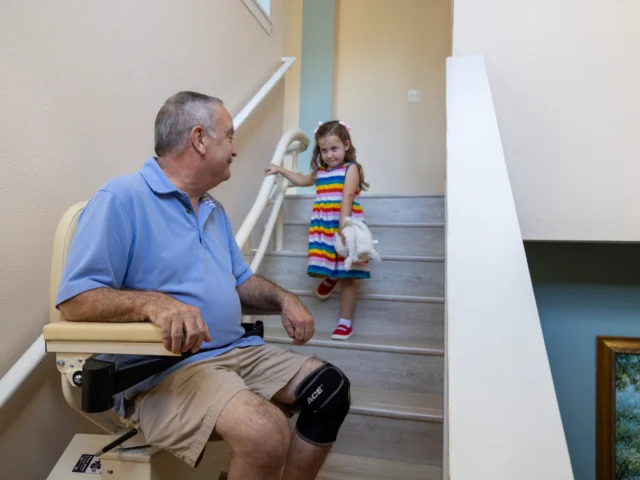
Home accessibility solutions – like stairlifts, home elevators, or platform lifts – can also reduce the strain of moving between levels during tasks like cleaning and organizing.
Stair Safety During Spring Cleaning
Stairs become especially dangerous during cleaning, mainly because people turn them into delivery routes for everything in the house.
Laundry, storage bins, cleaning supplies – suddenly you’re juggling items and your balance.
Risks to Watch
- Carrying bulky or heavy items
- Blocking your view of steps
- Making repeated trips up and down
- Clutter left on stairs
Stair Safety Tips
- Keep one hand free for the railing
- Use baskets or bags that don’t block your view
- Minimize trips – group items together
- Clear stairs before starting
- Take your time (this is not a race)
If stairs are starting to feel unsafe during everyday tasks like cleaning, it may be worth evaluating long-term solutions that reduce fall risk at home.
Knowing When to Ask for Help
There’s a stubborn myth around spring cleaning: That you should be able to do it all yourself.
Let’s retire that immediately and ask for help when:
- Lifting heavy furniture or storage bins
- Cleaning high or hard-to-reach areas
- Outdoor tasks like gutters or pressure washing
- Anything that makes you feel unsteady or unsure
For Caregivers and Adult Children
If you’re helping a parent or loved one:
- Focus on safety first – not speed
- Divide tasks based on ability
- Watch for signs of fatigue or discomfort
- Step in before something becomes risky
Asking for help isn’t a limitation, it’s a strategy. And a smart one.
Know Your Limits (and Respect Them)
If there’s one takeaway from all of this, it’s this:
Spring cleaning should improve your home—not put your health at risk.
Before you start, ask yourself:
- What can I realistically do safely?
- What should I break into smaller tasks?
- What should I ask for help with?
That awareness is what keeps you safe – and keeps your independence intact.
Final Thought
A clean home feels great. But staying injury-free feels better.
By following these spring cleaning safety tips, pacing yourself, and knowing your limits, you can avoid injuries during spring cleaning and keep your home – and your body – in good shape.
Because the goal isn’t just a spotless house.
It’s being able to enjoy it.