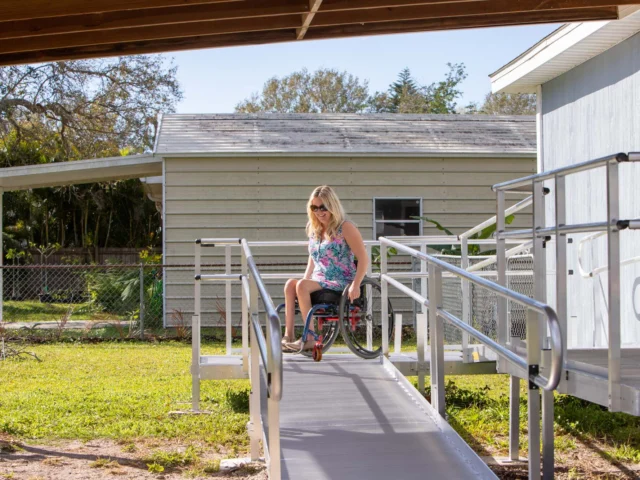
When it comes to creating a safer, more accessible home, ramps are often the first solution people consider. But ramps aren’t always practical—or possible.
Space limitations, steep elevations, landscaping obstacles, HOA restrictions, and safety concerns can make ramps difficult to install or uncomfortable to use. The good news? There are several highly effective ramp alternatives that offer smoother, safer, and more independent access for seniors and individuals with mobility challenges.
If you’re searching for ramp alternatives, you’re in the right place.
Why Ramps Don’t Always Work
Before exploring other options, it’s important to understand the situations where a ramp may not be the best fit.
Homeowners commonly look for alternatives to wheelchair ramps when:
- The elevation is too high for a safe or ADA-like slope
- The available space can’t accommodate a long ramp
- A ramp would obstruct walkways, garages, or yard space
- Weather, rain, or ice would make the ramp unsafe
- HOA or community rules limit exterior modifications
- The user needs powered or hands-free mobility assistance
If any of these apply, it’s time to consider ramp alternatives that provide safer, more reliable access.
Top Ramp Alternatives for Home Accessibility
1. Vertical Platform Lifts (VPLs)
Primary Use Case: Walker, wheelchair, scooter, and powerchair users who need to access porches, decks, and elevated entryways.
A Vertical Platform Lift is one of the most powerful and efficient ramp alternatives available. Instead of navigating a long incline, the user simply rolls onto the lift platform and rises to the entry level with the push of a button.
Why a Platform Lift Works When Ramps Won’t
- Ideal for high or steep entryways
- Takes up significantly less space than a ramp
- Weather-resistant and designed for outdoor use
- Safe for wheelchair or scooter users
- Provides powered lifting—no physical strain
- Can be installed in garages, beside porches, or next to decks
Models like the Harmar VPL400-X and Highlander II offer smooth, dependable access and are built for long-term reliability.
Platform lift vs ramp?
When elevation is high or space is limited, a platform lift is the safer, simpler choice – and might be more cost-effective.
2. Stairlifts for Indoor or Outdoor Steps
Primary Use Case: Individuals who walk, transfer, or use mobility aids such as canes but cannot safely climb stairs.
If the user can safely transfer from a wheelchair or doesn’t rely on one full-time, a stairlift is a practical alternative.
Why Stairlifts Are an Effective Ramp Alternative
- Perfect when exterior stairs are too steep for a ramp
- Require minimal space on the stairs
- Provide safe, seated travel between levels
- Available for straight, curved, or outdoor staircases
- Quick installation—often within hours
Harmar’s lineup, including the Pinnacle SL300, SL600, SL600HD, Helix and UP curved stairlift, gives homeowners multiple options for different staircase layouts.
Stairlift vs ramp?
Choose a stairlift when the user walks with support, can support themselves without balance issues when seated, or doesn’t require full-time wheelchair mobility.
3. Vehicle Lifts
While not used for home entry, vehicle lifts are an essential part of a complete accessibility plan—especially for powerchair or scooter users.
These lifts help transport mobility devices safely without requiring the user to navigate a ramp at all. When paired with a platform lift or stairlift at home, a vehicle lift helps maintain independence both indoors and out.
4. Low-Profile Threshold Ramps (When Only a Small Boost is Needed)
Primary Use Case: 1–3-inch doorway transitions.
When ramps won’t work for large elevations, a threshold ramp may still help in small areas where the height difference is minimal. These are not substitutes for full ramps, but they pair well with VPLs or stairlifts as part of a whole-home accessibility plan.
How to Choose the Right Ramp Alternative
Every home—and every mobility need—is different. The right solution depends on:
- Elevation height
- Available space
- Type of mobility device (wheelchair, walker, scooter, none)
- Weather exposure
- Transfer ability and stability
- Long-term independence goals
A Harmar Certified Dealer can evaluate your home and recommend the safest, most cost-effective ramp alternatives that fit your loved one’s mobility needs.
Why Ramp Alternatives Might Be A Better Choice
While ramps play an important role in many homes, lift systems often provide a smoother, safer, and more convenient option—especially when ramps won’t work due to space, slope, or usability concerns.
Choosing a platform lift, stairlift, or wheelchair lift ensures:
- Reduced fall risks
- Minimal physical strain
- Improved independence
- Weather-resistant reliability
- Smarter use of space
These upgrades don’t just solve mobility problems—they enhance comfort, dignity, and peace of mind.
Ready to Explore Ramp Alternatives?
Harmar lifts lives by providing powerful accessibility solutions that meet your unique needs. If ramps aren’t an option, our team can help you find the safest, most dependable alternatives.
Are you ready to learn more about the products that might best fit your home and needs? Find a Certified Harmar Dealer near you today!