Beautifully Accessible: Helping Clients Integrate Home Access Products Without Sacrificing Style
August 19, 2026
For many clients, accepting a home access product is not simply a design decision. It can feel like a visible acknowledgment that their mobility, health, or independence has changed.
Straight Stairlifts, ramp, vertical platform lift, home elevator, or other accessibility solutions may make daily life safer and easier, yet clients can still hesitate when they imagine how the product will look in their home. They may worry that familiar rooms will begin to feel like a hospital—or that visitors will notice the equipment before they notice the people who live there.
Physical therapists and occupational therapists can help clients move beyond that fear. By approaching accessibility as part of a thoughtful home design strategy, therapists can help clients create spaces that support mobility while still feeling comfortable, personal, and beautiful.
Why the Appearance of Accessibility Products Matters
A home is more than a collection of rooms. It reflects a person’s routines, memories, preferences, and sense of identity. When a client resists a recommended home modification, the hesitation may have less to do with the product itself and more to do with what they believe it represents.
They may be thinking:
- Will my home still feel like mine?
- Will this make the space look institutional?
- What will my friends or family think?
- Does accepting this mean I am giving up?
- What if I invest in something I dislike seeing every day?
- Will having these products make me look like I am handicapped?
These concerns are not shallow. A solution is more likely to be accepted and used consistently when the client feels comfortable living with it. Aesthetics, dignity, independence, and function are often deeply connected.
Instead of dismissing appearance as secondary to safety, therapists can acknowledge that both matter. The goal is not to disguise accessibility at all costs. It is to integrate supportive products in a way that respects the client, the client’s personal aesthetic, and the character of the home.
Start With the Life the Client Wants to Keep Living
Conversations about home access often begin with a limitation: stairs have become difficult, an entryway is no longer easy to navigate, or transferring between levels now requires help. A more encouraging conversation can begin with the activity the client wants to preserve.
Ask questions such as:
- Which areas of your home matter most to your daily routine?
- Where do you feel most independent?
- What activities do you want to continue doing on your own?
- Are there rooms you have begun to avoid?
- What do you love about the way your home currently looks and feels?
- What would make an accessibility product feel more acceptable to you?
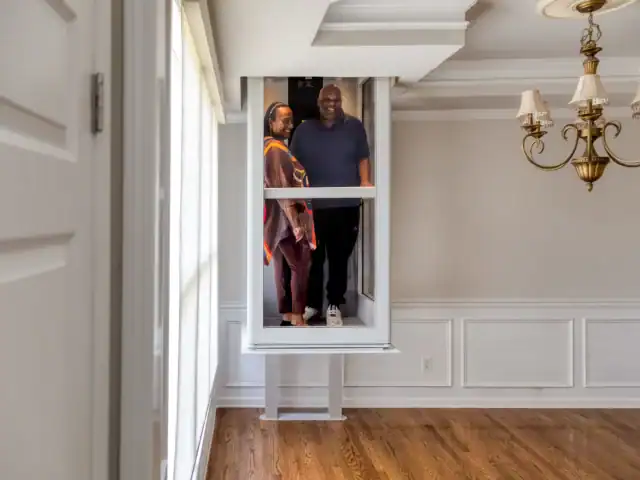
This shifts the focus from what the client can no longer do to what the right solution may help them continue doing. A stairlift is not just a piece of equipment on the staircase; it may provide continued access to the client’s bedroom. A platform lift is not simply a structure near the porch; it can allow someone to leave home independently, visit friends, or attend appointments. A home elevator isn’t just a cabin that goes up and down when needed – it’s a means of convenient transportation for people, heavy packages, and even older pets.
When therapists connect the product to a meaningful outcome, clients might begin to see accessibility as a way to protect their lifestyle—not surrender it.
Treat Accessibility as Part of the Design Plan
Home access products are sometimes considered only after the rest of a space has been designed. That can make them feel visually disconnected or added as an afterthought. Whenever possible, encourage clients and their families to consider accessibility alongside the home’s existing layout, colors, finishes, lighting, and traffic patterns.
Several design choices can help a product feel more intentional:
Coordinate Colors and Finishes
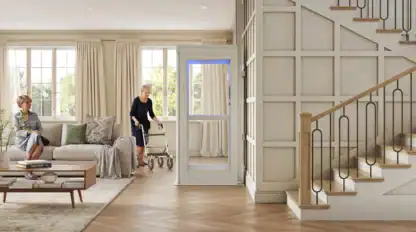
When customization options are available, clients can select upholstery, rails, finishes, or other visible elements that complement nearby flooring, walls, trim, and furniture. A coordinated product may blend quietly into the room, while a contrasting finish can make it look purposeful with your personal taste.
The best choice depends on the client. Some people want a solution to recede visually. Others would rather treat it as a well-designed feature. Neither approach is inherently better.
Preserve Visual Space
Compact equipment, folding components, or products positioned close to a wall may help maintain an open appearance and preserve the home’s natural pathways. The ideal placement should support safe use without making the room feel crowded.
Therapists can help clients think beyond photographs of the product itself. How will it look from the entryway? Will it affect a favorite seating area? Can family members still move comfortably through the space? Viewing the full environment often leads to better decisions than evaluating equipment in isolation.
Use Lighting Intentionally
Good lighting is essential for navigation, but it can also make an accessible space feel warm and inviting. Layered lighting, attractive wall sconces, under-cabinet illumination, and well-placed fixtures can improve visibility without giving the home a clinical atmosphere.
When new equipment changes how a client enters or moves through an area, revisit the lighting plan as part of the modification.
Keep Surrounding Décor Personal
Accessibility products do not require clients to strip a space of personality. Art, family photos, plants, textiles, and favorite colors can help the area continue to feel lived-in and familiar—as long as décor does not obstruct safe routes, controls, transfers, or equipment operation.
A well-integrated space should still tell the client’s story.
Help Clients Choose Products With Both Function and Fit in Mind
The most attractive product is not a successful choice if it does not safely meet the client’s needs. Likewise, a technically appropriate product may go unused if the client dislikes it, cannot operate it confidently, or feels it overwhelms the home.
Therapists can help clients balance both sides of the decision by considering:
- Current mobility, transfer ability, balance, strength, and endurance
- Whether the client walks, uses a wheelchair, or uses a mobility scooter
- The product’s weight capacity and space requirements
- The home’s staircase, landing, doorway, and entry configuration
- Ease of operation for the client and caregivers
- How the client’s needs may change over time
- Product placement, profile, color, upholstery, and finish options
- The effect on other members of the household
- Local installation, permitting, or code considerations
This is also a good time to involve a qualified accessibility professional or authorized dealer. A home evaluation can reveal options that may not be obvious from online research alone, particularly when the layout is unusual or the client is comparing multiple solutions.
Reframe the Product as a Tool for Independence
Language has enormous influence on how a client experiences a recommendation. Phrases centered only on risk, decline, or inability may increase resistance. The safety concern should still be discussed honestly, but it does not have to be the entire story.
Consider reframing the conversation:
| Instead of focusing only on… | Also emphasize… |
| Preventing a fall | Moving through the home with greater confidence |
| No longer being able to use the stairs | Regaining access to another level of the home |
| Needing special equipment | Choosing a tool that supports independence |
| Preparing for decline | Making the home work more safely now and in the future |
| Changing the home because of a limitation | Personalizing the home around the client’s priorities |
This is not about minimizing a client’s condition or forcing positivity. It is about presenting a complete picture. Home access products can address risk while also expanding choice, privacy, comfort, and control.
Give Clients Meaningful Choices
Clients may feel that many decisions are being made for them during an illness, injury, or change in mobility. Working with the home access product provider and offering real choices during the process can restore a sense of agency.
When clinically and technically appropriate, work with the accessibility product dealer to invite the client to participate in decisions about:
- Product type and placement
- Color and finish
- Seat fabric or upholstery
- Which entrance or staircase to modify
- Whether a solution should blend in or stand out
- Timing and installation planning
- Which family members or caregivers should be involved
Even small choices can change the emotional tone of the project. The client is no longer simply receiving equipment; they are shaping their own environment.
Use Visualization to Reduce Uncertainty
Clients may initially reject a solution because they are imagining the worst possible version of it. Help make the proposed change more concrete.
Depending on the project, this may include:
- Reviewing photographs of installations in homes with a similar style
- Requesting finish or upholstery samples
- Marking the approximate footprint with painter’s tape
- Using product measurements to show how much walking space will remain
- Asking whether a dealer can provide a digital rendering or examples of comparable installations
- Visiting a showroom when possible
Seeing scale, color, and placement can replace a vague fear with a specific decision. It also gives the client an opportunity to raise concerns before installation.
Include Accessibility Early—Not Only During a Crisis
Home access decisions are often made after a fall, hospitalization, or sudden change in mobility. Under those circumstances, clients and families may feel rushed and have fewer opportunities to compare options or consider aesthetics.
PTs and OTs can encourage earlier planning when they notice emerging difficulty with stairs, transfers, entrances, or daily routines. Planning ahead may give clients more time to:
- Compare products and configurations
- Explore design and customization options
- Budget for the project
- Coordinate with renovation plans
- Discuss future mobility needs
- Select a solution before access becomes urgent
Early planning can make an accessibility improvement feel like a deliberate home upgrade instead of an emergency intervention.
Respect the Emotional Adjustment
Even a beautifully integrated solution can carry emotional weight. A client may understand the benefits and still grieve the change that made the product necessary. Therapists can make room for that reaction without abandoning the recommendation.
Try acknowledging the concern directly: “It makes sense that you want your home to continue feeling like your home. Let’s look for a solution that supports your safety and independence while respecting the style and spaces that matter to you.”
This way, the client’s identity is move validated and makes the conversation collaborative. Acceptance may take more than one discussion, especially when the change is permanent or highly visible.
Beautiful Accessibility Is Personal
There is no single formula for an accessible home that feels beautiful. For one client, success may mean a stairlift that blends into neutral surroundings. For another, it may mean a sleek platform lift paired with updated landscaping and a redesigned entrance. For someone else, beauty may simply mean remaining in the home they love and reaching every important room without asking for help.
Physical and occupational therapists are uniquely positioned to connect clinical needs with real life. By listening to clients’ concerns, preserving choice, involving qualified home access professionals, and considering design alongside function, therapists can help make accessibility feel less like an intrusion and more like an investment in the client’s future.
The most successful accessible spaces do more than reduce barriers. They allow the home to remain what it has always been: a place of comfort, identity, connection, and independence.
Help Clients Find the Right Home Access Solution
When a client is ready to explore stairlifts, vertical platform lifts, ramps, or other home access products, encourage them to begin with an individualized evaluation. The right solution should address the person’s mobility needs, fit the home’s layout, and support the way they want to live—without treating style as an afterthought.
Work with a Trusted Local Dealer
To find a certified dealer in your area to help with the sale and installation of the appropriate lift (and any customization), visit Harmar’s Dealer Locator.