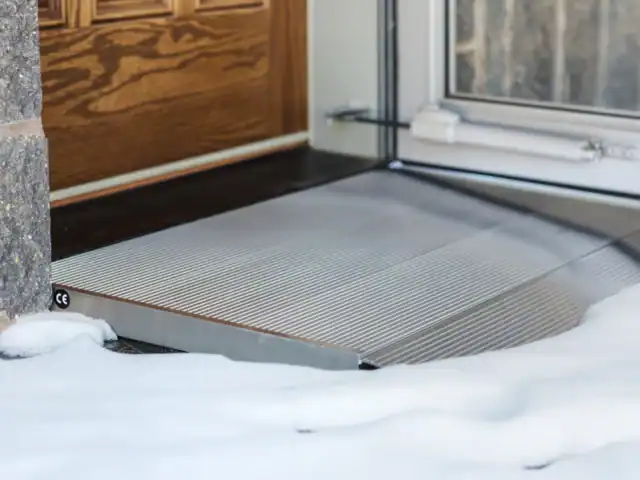
Why Ramp Safety Is Critical During Winter
Winter brings unique challenges for anyone relying on ramps for safe, independent mobility. For seniors, caregivers, and families, understanding these risks and taking proactive steps can mean the difference between a safe season and a dangerous fall.
Increased Slip and Fall Risks
Slippery conditions dramatically increase the risk of falls on ramps. Even a thin layer of ice or a dusting of snow can create hazardous footing for anyone using a wheelchair, walker, or cane. Falls on ramps are particularly concerning because the incline amplifies the likelihood of injury, making preventive measures essential for maintaining safety.
Mobility Challenges in Snow and Ice
Snow accumulation and ice build-up can make ramps difficult to navigate. You or your loved one may find it exhausting to maneuver mobility devices through snow-packed surfaces, and caregivers may struggle to provide assistance safely. Making sure ramps remain clear, accessible, and properly maintained during winter is critical for preserving independence and avoiding strain or injury.
How Cold Weather Affects Ramp Materials
Cold temperatures can take a toll on ramp materials over time. Wood may warp, crack, or become slick, while metal ramps can become icy or brittle in freezing conditions. Even durable composites can lose traction if not treated or maintained correctly. Regular inspection and maintenance help preserve both the integrity and safety of the ramp, ensuring it continues to perform reliably in challenging weather.
Proper preparation before the first snowfall can dramatically reduce winter hazards and extend the life of your ramp. By taking a few proactive steps, you can remain confident that your ramp remains safe, stable, and accessible throughout the season.
Preparing Your Ramp for Winter
Inspect for Damage or Loose Hardware
Before winter arrives, carefully examine your ramp for signs of wear or damage. Look for loose screws, bolts, or fasteners, as well as cracks, splinters, or warped boards. Addressing these issues early prevents small problems from worsening under the stress of snow, ice, and freezing temperatures. Tightening hardware and replacing damaged components ensures your ramp stays secure and reliable.
Apply Weather-Resistant Coatings or Sealants
Wood and composite ramps benefit from protective coatings or sealants that repel moisture and prevent ice from forming on the surface. Metal ramps may also require rust-resistant treatments to withstand snow and de-icing chemicals. Applying these protective layers before winter sets in helps preserve the ramp’s durability while maintaining a safer, more slip-resistant surface for daily use.
Add Non-Slip Surfaces or Traction Mats
Enhancing traction is a key step in winter ramp safety. Non-slip tape and specialized traction mats provide extra grip for wheelchairs, walkers, and footwear. These surfaces offer reassurance and stability, reducing the likelihood of slips, even when snow or ice cannot be completely avoided. Installing removable mats can also make routine cleaning easier, ensuring your ramp stays clear and functional throughout the season.
Once your ramp is prepared for winter, daily upkeep is essential to keep it safe and accessible. Small, consistent efforts can prevent dangerous ice, prolong the life of your ramp, and give you peace of mind.
Daily Winter Maintenance Tips
Clear Snow Promptly and Safely
Snow left on a ramp can quickly become compacted and slippery which creates hazardous conditions. Shovel or sweep snow off the ramp as soon as possible. For wheelchair users, a ramp snow blower or specialized push broom can make clearing easier without causing damage to the ramp surface. Prompt snow removal prevents ice formation and keeps pathways navigable.
Use the Right De-Icing Products (Pet- and Metal-Safe)
Salt and traditional chemical de-icers can damage wood, metal, and composite ramps over time. Instead, opt for pet- and metal-safe alternatives like calcium magnesium acetate or sand for traction. Apply sparingly to prevent corrosion or surface damage while still reducing the risk of slips. Choosing safe de-icing products protects both your ramp and the people who rely on it.
Keep Drainage Areas Clear to Prevent Ice Buildup
Blocked drainage can lead to water pooling and freezing on or around the ramp. Ensure gutters, downspouts, and ramp edges are free of leaves, debris, and ice. Proper drainage minimizes slick spots and preserves ramp integrity, reducing the likelihood of accidents and costly repairs.
Accessibility and Mobility Best Practices in Winter
Maintaining accessibility and mobility during winter goes beyond ramp maintenance as it also involves personal safety strategies. Wearing proper footwear with non-slip soles and using wheelchairs or mobility devices equipped with winter-appropriate tires can dramatically reduce the risk of slips and falls. Whenever conditions are slippery, having a support person nearby adds an extra layer of safety, whether to provide guidance or assist with navigating ramps and walkways. In particularly harsh weather, considering temporary indoor mobility options, such as relocating essential activities to ground-level rooms or using portable ramps inside, can help you maintain independence while minimizing exposure to icy hazards.
Long-Term Ramp Care During Cold Seasons
Long-term ramp care during cold seasons is essential to preserve safety, functionality, and durability year after year. After winter, scheduling a professional inspection can identify hidden damage caused by snow, ice, and de-icing chemicals. Experts can check for loose hardware, warping, corrosion, or structural weaknesses that may not be obvious during routine visual checks. For wooden or aluminum ramps, an annual cleaning and resealing is highly recommended. Removing dirt, salt residue, and moisture buildup before applying a protective sealant helps prevent rot, rust, and surface deterioration.
Portable ramps should also be carefully stored when not in use to protect them from harsh winter conditions. Keeping these ramps indoors or under a weather-resistant cover prevents unnecessary wear from snow, ice, and freezing temperatures, ensuring they are ready for reliable use when needed. By combining professional inspections, proper cleaning and sealing, and thoughtful storage practices, you can safeguard your ramps against the harshest elements. Long-term care not only enhances safety but also reduces costly repairs and provides peace of mind and uninterrupted accessibility throughout the year.
Why Choose Harmar Ramps for All-Season Safety
Designed with durable, weather-resistant construction, Harmar ramps withstand snow, ice, and freezing temperatures without compromising structural integrity. Their non-slip surfaces are engineered to provide reliable traction in all conditions, helping you navigate them safely even in challenging winter weather.
Harmar ramps are built for easy maintenance and long-term reliability. With a focus on accessibility, durability, and practical design, Harmar ramps offer a trusted solution for year-round mobility, protecting both your loved ones and your investment while promoting independence and confidence in every step.
Frequently Asked Questions
How can I keep my wheelchair ramp from freezing?
Use heated ramp mats, apply non-slip coatings, and keep the ramp clear of snow and ice.
What’s the safest way to remove snow from a ramp?
Shovel or sweep promptly with a plastic or rubber shovel to avoid damaging the surface, working carefully to maintain balance.
Which de-icing products are safe for metal ramps?
Pet-safe and metal-safe options like calcium magnesium acetate or sand/grit alternatives.
Can I use salt on an aluminum or wooden ramp?
No, salt can corrode metal and damage wood. Opt for pet- and metal-safe alternatives like calcium magnesium acetate or sand for traction.
Are there ramps designed specifically for winter conditions?
Yes, some ramps feature non-slip surfaces, weather-resistant materials, and optional heated systems for all-season safety.