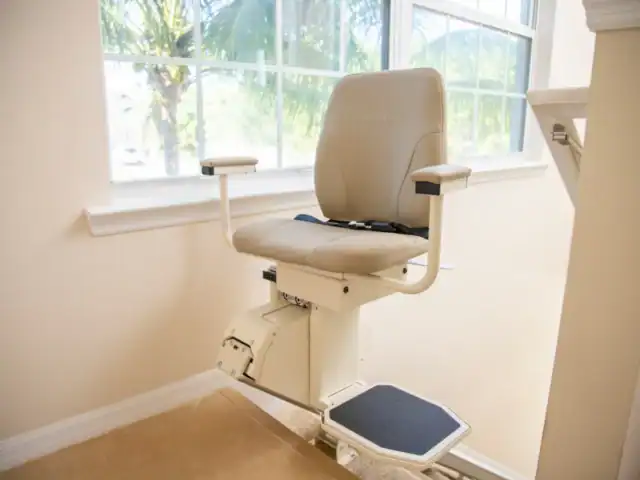
A stairlift can continue to run exactly as designed and still stop meeting the needs of the person who uses it. Changes in comfort, balance, strength, transfer ability, mobility equipment, caregiver support, or the home itself may all affect whether a stairlift remains the right solution.
If you think, “I may have outgrown my stairlift,” start with a professional assessment. An authorized stairlift dealer or qualified accessibility specialist can determine whether manufacturer-approved adjustments or service may help, whether replacing the stairlift would provide a better fit, or whether a platform lift or home elevator may be more appropriate.
Changing mobility needs are normal. The goal is not to keep using the same equipment at all costs; it is to maintain safe, practical access to the parts of your home that matter.
What Does It Mean to Outgrow a Stairlift?
Outgrowing a stairlift does not refer only to body size or weight. It means the stairlift no longer fits the user, the home, or the way the equipment must support daily life.
For example, a stairlift may no longer be suitable if:
- The seat or footrest no longer supports a comfortable riding position.
- Getting onto or off the seat has become difficult or unsafe.
- The user is near or above the stairlift’s rated weight capacity.
- The user now relies on a wheelchair or mobility scooter and cannot transfer safely.
- The lift no longer reaches every floor, entrance, or living space the user needs.
- Changes to the staircase or landings have affected clearance or access.
- The equipment has become unreliable, or repeated repairs do not address the underlying fit problem.
One concern does not automatically mean a stairlift must be replaced. It does mean the lift, the user, and the surrounding space should be reviewed together.
Signs Your Current Stairlift May No Longer Be the Right Fit
Consider the entire trip—from approaching the staircase to leaving the lift. A stairlift can be mechanically functional while a transfer, seating position, or landing has become difficult.
The Seat or Footrest No Longer Feels Comfortable
A stairlift should allow the user to sit stably with both feet securely on the footrest. Cramped seating, poor posture, inadequate legroom, or pressure at the hips or knees may signal an adjustment need or an unsuitable seat configuration. Do not add cushions, extensions, or makeshift supports unless the manufacturer approves them for that model; they may affect positioning, clearance, sensors, or the safety belt.
Getting On or Off the Lift Has Become Difficult
The user must be able to approach the chair, sit, position their feet, use the safety belt and controls, and transfer off at the other landing. Reduced balance, strength, flexibility, or coordination can make these steps harder. A swivel seat may help the user face away from the staircase, but the transfer must still be safe. If assistance has increased or transfers feel unstable, schedule an assessment.
The User Is Near or Above the Rated Weight Capacity
Every stairlift has a manufacturer-stated weight capacity that applies to the complete system. It is a safety limit, not a flexible target. Do not operate above it or try to increase it through unofficial modifications. If the user is close to or exceeds the rating, a professional can identify an appropriately rated option and confirm its fit with the staircase.
The User Now Relies on a Wheelchair or Mobility Scooter
A stairlift carries a person in its seat, not an occupied wheelchair or scooter. Even when a household keeps another mobility device upstairs, safe transfers are required at both ends. If transferring becomes painful, exhausting, or unsafe, a platform lift may offer a better no-transfer solution, depending on the device, route, space, and landings.
The Stairlift No Longer Reaches Every Needed Area
A move, remodel, new bedroom, different primary entrance, or change in routine may leave important spaces outside the stairlift’s route. The answer may be another stairlift, a different rail, a vertical platform lift at an entrance, or a broader whole-home solution. Begin with the destinations the user must reach—not with a predetermined product.
Start With a Professional Stairlift Assessment
Contact the dealer who installed the stairlift, an authorized service provider, or a qualified accessibility specialist. If the original provider is unavailable, Harmar’s dealer network can help connect owners with local support.
A useful home accessibility assessment should evaluate three things together: the person, the equipment, and the home. Ask the professional to:
- Confirm the stairlift model, age, condition, service history, and rated capacity.
- Review seat fit, foot placement, posture, safety-belt use, and access to the controls.
- Observe how the user approaches, transfers to, rides, and exits the stairlift.
- Check the seat, footrest, armrests, swivel mechanism, rail, batteries, charging system, sensors, and mounting points.
- Measure the staircase, nearby doorways, top and bottom landings, and surrounding clearance.
- Discuss current mobility, expected changes, mobility-device use, and available caregiver support.
This review distinguishes a correctable equipment issue from a broader accessibility change and provides a basis for comparing service, replacement, or another lift.
For unusual sounds, charging problems, error codes, damaged parts, or inconsistent operation, see What Should I Do if My Stairlift Needs Servicing?.
Can an Existing Stairlift Be Adjusted?
Possibly. Depending on the model, an authorized professional may address some concerns through approved adjustments, compatible accessories, parts, or service. Adjustment ranges vary and cannot change the lift’s rated capacity.
Possible Adjustments or Service Options
A professional may evaluate:
- Seat height, position, or orientation, when the model allows adjustment.
- Armrest and footrest movement.
- Swivel-seat operation and locking.
- Control placement and response.
- Safety-belt condition and compatibility.
- Battery condition and charging performance.
- Obstruction sensors and other safety features.
- General wear, mounting security, and service needs.
The dealer should confirm whether an accessory or part is approved for the exact stairlift model. If the chair is uncomfortable because it is too narrow, for example, a wider seat may be available for some products, while other models may require replacement.
Changes That Should Not Be Attempted at Home
Do not alter the rail, bypass sensors, change structural components, modify wiring, increase the rated capacity, or attach unapproved parts. Avoid makeshift seat, footrest, or transfer modifications as well.
These changes can affect clearances, stopping points, safety systems, and product performance. Follow the owner’s manual for manufacturer-identified user tasks and leave adjustments and repairs to an authorized professional.
When Replacing the Stairlift May Be the Better Choice
Stairlift replacement may make more sense when the current equipment cannot safely accommodate the user or the home, even after approved service or adjustments.
Consider discussing replacement when:
- The required weight capacity exceeds the current stairlift’s rating.
- The user needs a wider or differently configured seat.
- Transfers remain possible, but the seat position or landing setup makes them unsafe.
- The staircase has been remodeled, extended, or changed from a straight route to a curved one.
- Approved parts or compatible accessories are no longer available.
- The stairlift needs repeated service yet still does not provide dependable daily access.
- A newer model would better match the user’s current functional needs.
Replacement means selecting the right capacity, seating, controls, rail configuration, landing clearance, and service support—not simply the most features.
If needs are changing gradually, do not wait until the lift is unusable. The best time to evaluate a stairlift is when changes first become noticeable and there is time to compare options thoughtfully.
When a Platform Lift May Be More Appropriate
Platform lifts carry a user with a mobility device, potentially removing the need to transfer. They generally require more space and planning than a stairlift but can offer greater flexibility.
Vertical Platform Lifts
A vertical platform lift, or VPL, moves between two levels and is often used at porches, decks, garages, and raised entrances. Depending on the model, it may carry a wheelchair, power chair, or scooter. An assessment should consider platform and device dimensions, travel height, entry and exit configuration, gates, landings, site preparation, electrical needs, and local requirements.
Inclined Platform Lifts
An inclined platform lift travels along a staircase while carrying a wheelchair user. Feasibility depends on the mobility device, staircase width and turns, structural conditions, and landing clearance. A professional must measure the route and confirm the application.
Platform Lift vs. Stairlift
A stairlift is typically more compact and suits a person who can transfer and remain seated securely. A platform lift accommodates mobility-device access but usually requires a larger footprint, more planning, and potentially more construction or permitting. Neither is universally better; match the choice to transfer ability, device, route, space, and expected needs. Harmar’s guide to home access products for wheelchair users offers additional comparison points.
Could a Home Elevator Be the Better Long-Term Solution?
A home elevator may be worth considering when a household needs access across multiple floors, expects broader mobility changes, or wants room for a wheelchair, caregiver, laundry, or groceries. It involves a substantially different budget, construction scope, space review, permitting process, and installation plan from a stairlift replacement. Consider who and what it must carry, how many levels it will serve, and whether the home can accommodate it. For a comparison, review stairlifts, platform lifts, and home elevators.
Questions to Ask Before Choosing Your Next Solution
Use these questions during an accessibility consultation:
- Can the user transfer independently and consistently today? Is that likely to change?
- Does the solution need to carry a wheelchair, power chair, mobility scooter, caregiver, or household items?
- What weight capacity, seat dimensions, platform size, and clearance are required?
- Which entrances, floors, bedrooms, bathrooms, and living spaces must remain accessible?
- Is caregiver assistance available? Should the next solution reduce that dependence?
- Can the home support the required footprint, landing space, electrical work, and construction?
- Are permits or other local approvals likely to be required?
- How will the equipment be serviced, and who provides local support?
- Would the solution still meet the household’s likely needs several years from now?
These questions shift the focus from replacing one product to providing reliable access for the next stage of life.
What to Expect During the Replacement or Upgrade Process
The exact process varies by product, home, and local requirements, but most projects follow a similar path:
- Initial consultation: The user or caregiver explains the current problem, daily access needs, mobility equipment, and goals.
- User and home assessment: A professional evaluates transfers, seating or platform requirements, stairs, landings, entrances, and clearances.
- Recommendation: The provider explains whether service, an adjusted configuration, replacement, or another type of lift may be appropriate.
- Measurements and planning: Detailed measurements confirm fit. Platform lifts and elevators may also require site, electrical, construction, or permitting coordination.
- Quote and scheduling: The provider outlines the equipment, approved options, installation scope, anticipated schedule, and service expectations.
- Installation and testing: Qualified installers secure, configure, and test the equipment according to the manufacturer’s requirements.
- User training: The user and caregiver learn normal operation, safe entry and exit, charging or power requirements, and who to contact for service.
Ask how the provider will coordinate removal of the current stairlift and safe access while work is underway.
How to Use the Current Stairlift Safely While You Decide
Stop using the stairlift and contact a professional if:
- The user cannot remain within the lift’s stated limits.
- Getting on or off the lift is unsafe.
- The seat, footrest, armrest, belt, rail, or mounting point is damaged or loose.
- The lift moves unpredictably, stops unexpectedly, or is otherwise unreliable.
- There is smoke, sparking, unusual heat, a burning smell, exposed wiring, or water intrusion.
For a less urgent fit or comfort concern, arrange an assessment promptly and use appropriate assistance in the meantime. Follow the current owner’s manual, and do not use improvised supports or modifications.
If the stairlift stops during a trip, remain seated with the safety belt fastened, follow the model-specific instructions, and call for assistance when needed. Do not attempt to climb off onto the staircase.
Planning Beyond the Immediate Problem
The next home accessibility solution should address more than today’s most obvious obstacle. Consider how the user reaches the home, bedroom, bathroom, kitchen, laundry area, garage, and outdoor living spaces. Think about emergency access, nighttime routines, the location of mobility devices, and how much physical help a caregiver must provide.
This whole-home view can reveal issues that a one-for-one stairlift replacement would miss. A second lift at an entrance, a bathroom modification, improved doorway access, or a different floor plan may be as important as movement along the staircase.
Aging in place mobility solutions work best as part of a plan that can adapt. You do not need to predict every future change. You do need to choose equipment that fits current needs safely and leaves room for likely changes.
Frequently Asked Questions
Can a stairlift seat be made wider?
It depends on the stairlift model. Some models may offer approved seat options or adjustments, while others do not. An authorized dealer should confirm compatibility, required staircase clearance, and whether a different stairlift is the safer choice. Do not attach an unapproved seat or extension.
What happens if I exceed my stairlift’s weight capacity?
Do not use a stairlift above its manufacturer-stated weight capacity. The rating applies to the complete system and should be treated as a safety limit. Stop using the lift and ask a qualified professional to recommend an appropriately rated solution.
Can a stairlift be upgraded instead of replaced?
Possibly. Manufacturer-approved accessories, compatible parts, adjustments, or service may resolve some problems. An upgrade cannot change every limitation, including the lift’s rated capacity or the dimensions of the existing staircase. A professional assessment can determine whether an upgrade addresses the real concern.
Is a platform lift better if I use a wheelchair?
A platform lift may be more appropriate when the user needs to remain in a wheelchair or scooter and transferring to a stairlift is unsafe or impractical. The right choice depends on the mobility device, route, available space, landings, and local installation requirements.
Can my existing stairlift be moved to another staircase?
Sometimes, but compatibility depends on the lift, rail, staircase type, dimensions, condition, and manufacturer requirements. A straight stairlift may be reusable only when the new staircase and rail configuration are compatible. Curved rails are designed for a particular route and generally cannot simply be moved to a different staircase. Have an authorized professional evaluate the equipment and both locations.
How do I know whether I need a stairlift, platform lift, or home elevator?
Choose based on transfer ability, mobility-device use, number of levels, available space, construction scope, budget, and expected future needs. Stairlifts suit many seated users who can transfer safely; platform lifts can carry compatible mobility devices; and home elevators may provide broader multi-floor access. A professional home accessibility assessment can help identify the best fit.
Who should inspect my stairlift before I continue using it?
Contact the original installing dealer, an authorized service provider, or a qualified accessibility specialist familiar with the stairlift’s manufacturer and model. If you own a Harmar stairlift and cannot reach the original dealer, use Harmar’s dealer locator to find local assistance.
Find the Right Fit for What Comes Next
Outgrowing a stairlift is not a failure, and it does not always mean starting over. The lift may need approved adjustments or service. A replacement stairlift may provide a better seat, capacity, or staircase fit. If transfers or mobility-device access have changed, a platform lift or residential elevator may better support long-term independence.
Start with a professional assessment of the user, the equipment, and the home. A Harmar dealer can help you compare appropriate home access solutions and plan the next step with safety, comfort, and daily life in mind. For find a certified dealer in your area, visit our Dealer Locator today!