If you’re researching stairlifts, you may have found yourself wondering why a stairlift might not work in certain homes. That uncertainty can feel frustrating—especially when safety and independence are on the line.
The truth is, stairlifts are an excellent solution in many situations, but they aren’t always the best fit for every home layout or every user. Understanding stairlift limitations is an important step in finding the safest and most effective home access solution.
At Harmar, we believe that when one option isn’t right, there’s almost always another solution that is.
Understanding When Stairlifts Aren’t the Best Option
How Stairlifts Work and What They’re Designed For
Stairlifts are designed to transport a seated user up and down an existing staircase using a rail system. They work best when:
- The user can safely sit down and stand up
- The staircase has adequate width and clearance
- The primary mobility challenge is navigating stairs—not transferring from a wheelchair
When these conditions are met, stairlifts can be a reliable, effective solution.
Why Certain Homes or Users May Need Alternatives
However, not all homes—or mobility needs—fit that profile. Structural limitations, unique layouts, or user requirements can create problems with stairlift installation or long-term use. In these cases, alternatives like vertical platform lifts, residential elevators, or ramps may provide safer, more appropriate access.
Common Reasons a Stairlift Might Not Work
Extremely Narrow or Curved Staircases
Some staircases are simply too narrow to safely accommodate a stairlift while still allowing others to use the stairs. Complex curves, tight landings, or unusual angles can also make installation impractical or unsafe.
This often leads homeowners to ask: Can a stairlift be installed anywhere?
The honest answer is no—and that’s okay.
Lack of Structural Support or Wall Clearance
Stairlifts require proper structural support and clearance for safe operation. In some homes, walls, railings, or construction materials may limit mounting options, making installation unsafe or non-compliant.
Outdoor or Multi-Entry Homes with Varying Levels
Homes with split levels, garages, porches, or outdoor entry points often need more than a single stairlift. In these situations, stairlifts may not address all access challenges—especially when elevation changes occur in multiple areas.
Users Who Require Wheelchair Access Between Floors
Stairlifts are not designed for wheelchair users. If a person relies on a wheelchair for mobility, transferring to a stairlift seat may be unsafe or impossible.
This is one of the most common scenarios where stairlift alternatives are necessary.
Rental or Shared Properties with Installation Restrictions
Some rental homes, condos, or shared properties restrict permanent modifications. Stairlift installation may not be permitted—or may need to be fully reversible—limiting feasibility.
Safety and Usability Considerations
When a Stairlift Doesn’t Meet Physical Needs
Certain physical conditions—such as limited trunk control, difficulty transferring, or severe balance issues—can make stairlifts uncomfortable or unsafe for daily use.
In these cases, safety must come first.
Limitations for Power Wheelchair or Heavy Equipment Users
Stairlifts are not built to transport power wheelchairs, scooters, or heavy mobility equipment. For users who depend on these devices, stairlifts simply aren’t suitable.
Accessibility Challenges Beyond the Staircase
Sometimes the staircase isn’t the only issue. Door thresholds, entryways, porches, or garage access may also present barriers. Solving just one part of the problem may not create true accessibility.
What to Do If a Stairlift Isn’t Right for You
If a stairlift won’t work, the solution isn’t to stop—it’s to pivot.
Residential Elevators — Excellent for Long-term Use and Futureproofing Your Home
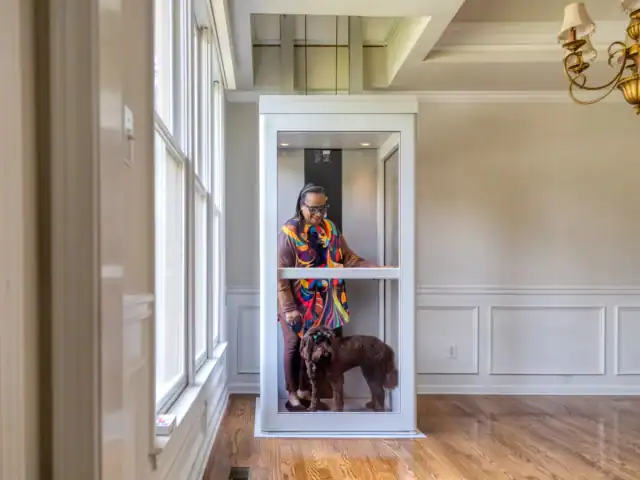
Residential elevators like the Pollock Lift are manufactured to provide a long-term home access solution for those with declining mobility, multigenerational homes, reliant on wheelchairs or other mobility devices, and those interested in aging in place. They’re great when:
- Space on the stairs is limited
- Wheelchair access is required
- Aging in place is the goal
Vertical Platform Lifts (VPLs) — Ideal for Wheelchair Users
Vertical platform lifts are designed to transport both the user and their wheelchair between levels. They’re an excellent solution for:
- Wheelchair users
- Short vertical rises
- Indoor or outdoor access
When comparing vertical lifts vs. stairlifts, VPLs often provide greater inclusivity and long-term flexibility.
Inclined Platform Lifts — Great for Tight Spaces
Inclined platform lifts travel along the staircase like a stairlift but carry a wheelchair instead of a seated rider. They’re ideal when:
- Space is limited
- Wheelchair access is required
- Staircases are narrow but structurally suitable
Modular Ramps — Flexible and Cost-Effective Options
For smaller elevation changes or entry access, modular ramps can be a practical outdoor solution. They’re:
- Customizable
- Often faster to install
- Suitable for temporary or permanent needs
How to Evaluate Your Home for Accessibility
Schedule a Professional Home Assessment
The best way to determine whether a stairlift—or an alternative—is right for your home is through a professional assessment. A trained Harmar dealer can evaluate:
- Staircase dimensions
- Structural considerations
- User mobility needs
- Entry and exit points
Consider Slope, Space, and Entry Access
Accessibility isn’t just about stairs. Evaluating slope, available space, and how people enter and move through the home ensures no barriers are overlooked.
Plan for Future Mobility Changes
Mobility needs often evolve. Choosing a solution that works not just today—but years from now—can prevent costly changes later.
The Harmar Approach to Customized Solutions
Matching the Right Product to Each Home
At Harmar, we don’t believe in one-size-fits-all solutions. If a stairlift isn’t suitable, our goal is to help find what is—safely, honestly, and thoughtfully.
Dealer Expertise and Personalized Installation
Authorized Harmar dealers are trained to evaluate real-world conditions, explain options clearly, and recommend solutions based on safety—not sales pressure.
Focus on Long-Term Safety and Comfort
Every recommendation is made with long-term independence, comfort, and peace of mind in mind. Because access solutions should adapt to life—not limit it.
Frequently Asked Questions
Can a stairlift be installed on any staircase?
Not exactly. Stair width, curvature, clearance, and structural support all affect feasibility. Depending on the structure and layout of the staircase, a straight or curved stairlift rail might work better than the other.
What are the limitations of a stairlift?
Stairlifts are designed for seated users and are not suitable for wheelchair transport or extremely narrow staircases. Those with poor balance when seated or standing up, or difficulties bending their knees might affect their abilities to use the stairlift safely and comfortably.
What can I use instead of a stairlift?
Vertical platform lifts, inclined platform lifts, residential elevators, and ramps are common alternatives.
Are there options for wheelchair users who can’t use a stairlift?
Yes. Vertical and inclined platform lifts, as well as residential elevators, are specifically designed for wheelchair users.
How do I know if my home can support a stairlift installation?
A professional home assessment from a Harmar dealer is the best way to determine suitability.
One Last Thing:
If you’ve discovered that a stairlift won’t work for your home, it doesn’t mean safe access is out of reach. It simply means the solution needs to be tailored to your space and your needs.
At Harmar, we’re here to help you find the right path forward—whatever that looks like. To connect with a certified Harmar dealer near you, visit our Dealer Locator!